

By MyRambut | Hair care guide for men and women in Malaysia
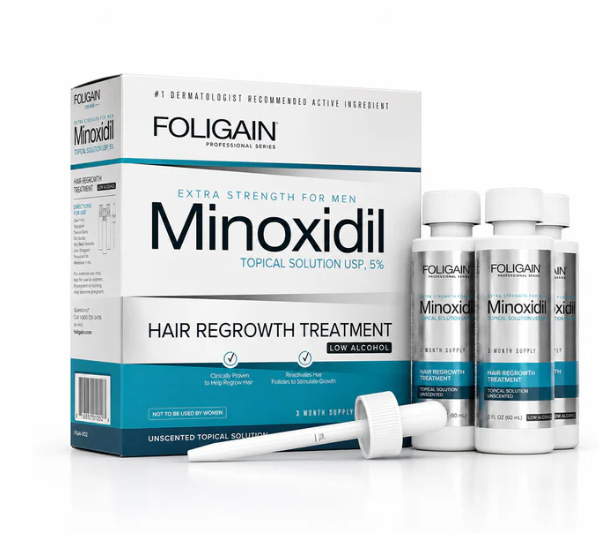
Minoxidil is one of the most widely used over-the-counter treatments for hereditary hair thinning (male and female pattern hair loss). It is sold as a liquid solution and as a foam, usually in 2% and 5% strengths. Used correctly, it is generally well tolerated, but results depend on proper use, patience, and knowing what is normal and what is not. This guide walks you through both.
What minoxidil does (and does not do)
Minoxidil is a vasodilator that is applied to the scalp to help stimulate hair growth. Doctors still do not fully understand exactly how it works. What we do know is that it can slow hair loss and help regrow hair in people with pattern hair loss, as long as it is used regularly.
It is not designed for every type of hair loss. It is generally not suitable for:
- Sudden or patchy hair loss
- Hair loss with no family history or no clear cause
- Hair loss after giving birth
- Hair loss caused by scalp conditions, infections or tight hairstyles
- Receding hairline at the front of the scalp (most products are labelled for the crown or top of the scalp)
If your hair loss is sudden, patchy, or comes with scalp pain, redness or scaling, see a doctor or dermatologist first.
Who should not use it without medical advice
- Anyone under 18
- Pregnant or breastfeeding women (minoxidil may pass into breast milk)
- People with heart problems, kidney disease or liver disease
- People with an irritated, sunburned, cut or infected scalp
- People who are allergic to minoxidil or any ingredient in the product
- People taking blood pressure medication
Also use the product made for your gender. Women should not use products made specifically for men.
How to use minoxidil step by step
Always follow the label of the exact product you bought, because strength and directions differ between brands. The typical directions are:
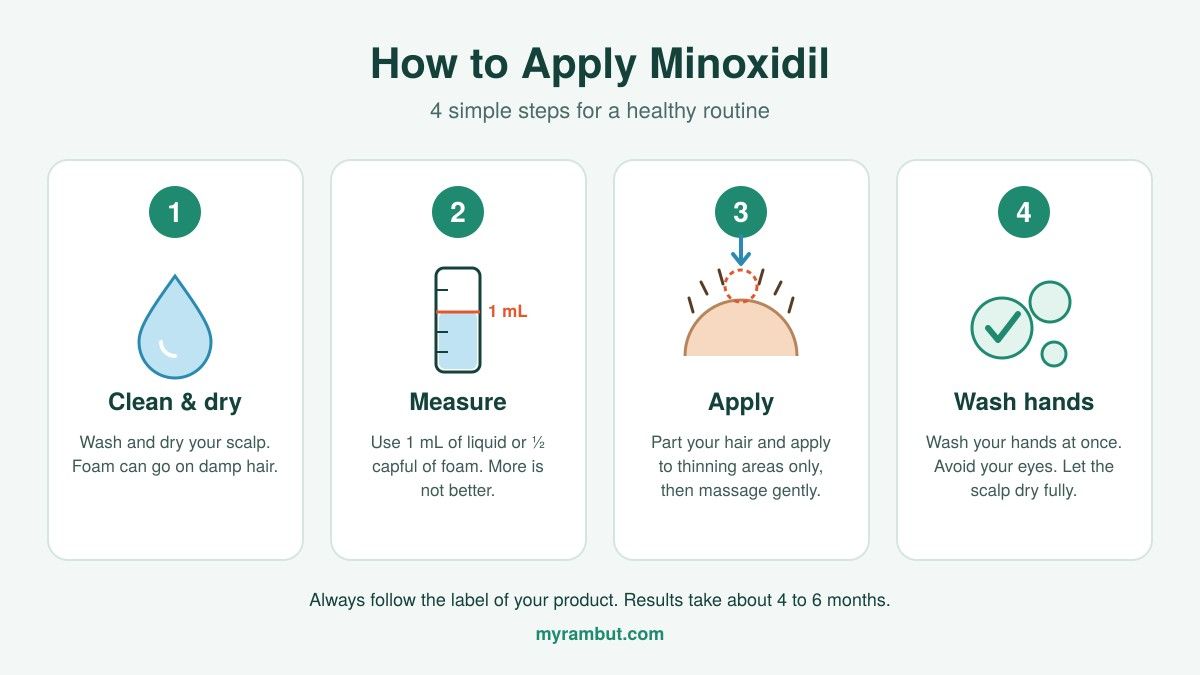
1. Start with a clean, dry scalp. Wash and dry your scalp and hair. Foam can usually be applied to damp hair, but liquid works best on a dry scalp.
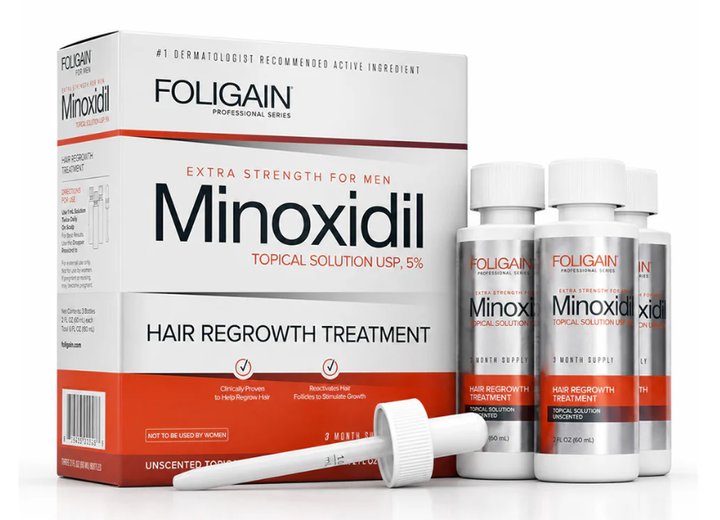
2. Measure the right amount. For liquid solution, use the dropper or applicator up to the 1 mL line (about 20 drops). For foam, use about half a capful. Applying more does not make hair grow faster. It only increases irritation and the amount absorbed into your body.
3. Apply only to the thinning area. Part your hair and apply directly to the scalp where hair is thinning, then massage gently. Do not apply it to other parts of the body.
4. Frequency. Most men's 5% products are used twice a day. Many women's 2% liquid products are also used twice a day, while women's 5% foam is usually used once a day. Check your product's label to be sure.
5. Wash your hands afterwards. This prevents the product from spreading to your face or other skin. Avoid contact with your eyes. If it gets in your eyes, rinse with plenty of cool water.
6. Let it dry fully. Wait until the scalp is completely dry before styling or going to bed. Avoid washing your hair for several hours after applying (most labels say at least 4 hours).
7. Do not double up. If you miss a dose, skip it and continue with your normal schedule. Never apply extra to catch up.
Extra tips
- Do not use other products on your scalp at the same time unless your doctor says it is fine.
- If your scalp gets irritated, avoid using minoxidil on days when you colour or chemically treat your hair.
- Keep the product away from children and pets.
How long until you see results?
Hair growth is slow. Most people need to use minoxidil consistently for about 4 months before seeing a benefit, and some need up to 6 months. If there is no improvement or your condition gets worse after 4 to 6 months, speak to your doctor.
Minoxidil only works while you keep using it. If you stop, the hair you gained will usually be lost over the following months.
Common side effects
Most side effects are mild and happen on the scalp:
- Burning, stinging or redness where you apply it
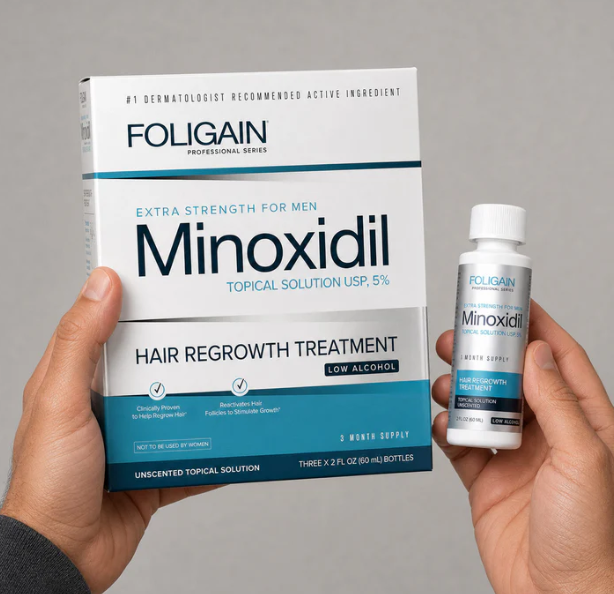
- Dryness, itching or flaking, which is often caused by the alcohol in liquid formulas. Foam or low-alcohol formulas may be gentler
- Changes in hair colour or texture
- Unwanted hair on the face or body, usually when the product drips or touches skin outside the scalp
If irritation lasts or gets worse, speak to a doctor or pharmacist. Switching formulation or reducing contact with the skin may help.
The "shedding" phase
Many people notice more hair falling out in the first few weeks. This temporary shedding is a known effect as weak hairs are pushed out to make room for new growth. It does not mean the product is failing. If heavy shedding continues beyond a few months, talk to your doctor.
Rare but serious side effects: stop and get medical help
In rare cases, minoxidil can be absorbed into the body and affect the heart and circulation. Stop using it and seek medical help right away if you experience:
- Fast or irregular heartbeat
- Chest pain
- Dizziness or fainting
- Swelling of the hands or feet
- Sudden or unusual weight gain
- Unusual tiredness
- Difficulty breathing, especially when lying down
- Signs of a severe allergic reaction such as rash or swelling of the face, tongue or throat
The risk goes up if you use more than directed or apply it to irritated, sunburned or broken skin. If someone swallows minoxidil by accident, treat it as an emergency and contact a doctor or poison centre immediately.
Tips to get the best results
- Be consistent. Use it at the same times every day.
- Take a photo of your scalp once a month in the same lighting to track progress.
- Be realistic. Minoxidil works best at slowing loss and thickening existing hair, and results vary from person to person.
- Buy from a trusted seller, and check the packaging, batch number and expiry date. Never use expired products.
- See a doctor if you also have fatigue, sudden hair loss, or other symptoms, because thinning can sometimes have other causes such as thyroid problems or iron deficiency.
Quick FAQ
Can women use 5% minoxidil? Some women's products are 5% foam, but men's liquid products are not designed for women. Use the version made for women and follow its label.
Can I use it on my beard? Minoxidil is sometimes used off-label for facial hair, but evidence is limited and it is not officially approved for that use. Ask a doctor first.
What happens if I stop? New growth is typically lost after stopping, so treat it as a long-term routine.
Can I use it with other hair products? Wait until the scalp is dry before styling products. Ask your doctor before combining with other scalp treatments.
Final thoughts
Minoxidil can be an effective, affordable way to manage pattern hair loss when it is used correctly, regularly and for long enough. Follow the label, watch for side effects, and speak to a healthcare professional if anything feels wrong or if you do not see improvement after 4 to 6 months.
Disclaimer: This article is for general information only and is not medical advice. Always read the product label and consult a doctor or pharmacist before starting any treatment, especially if you have a medical condition, are pregnant or breastfeeding, or take other medication.